First 24 Hours with the Canon RP

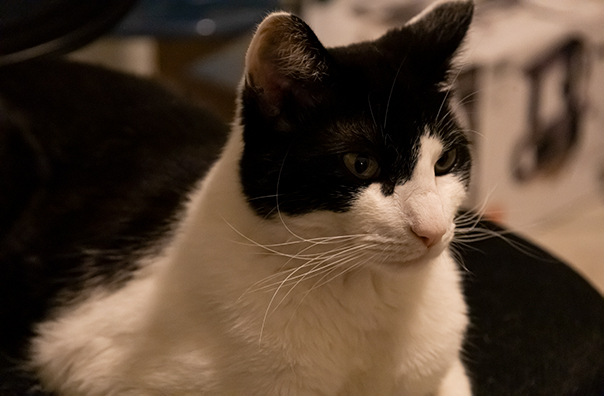
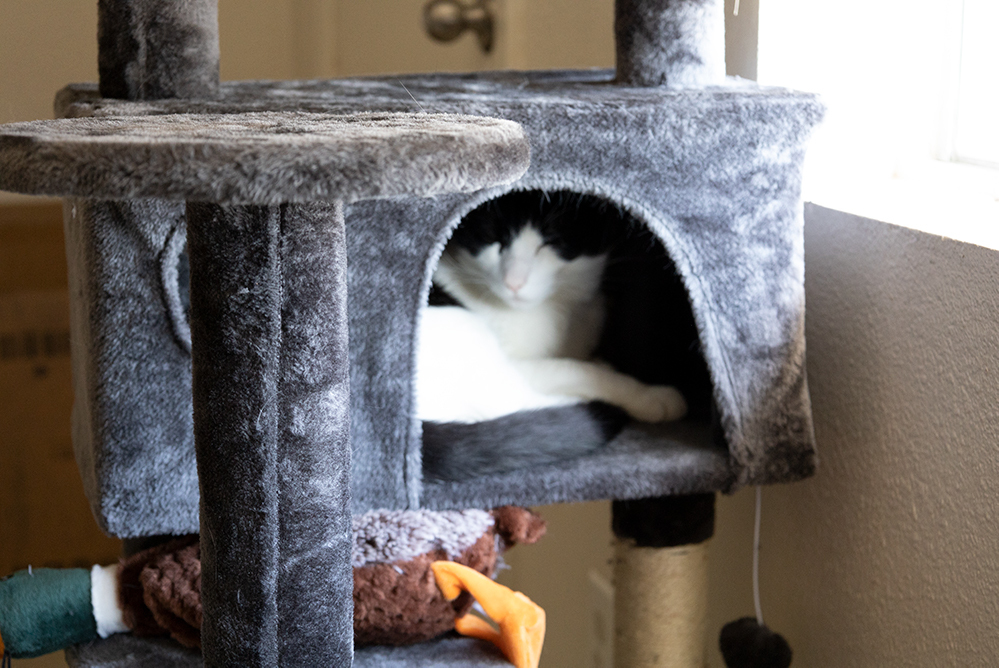
First picture with Canon RP w/ 24-105 STM
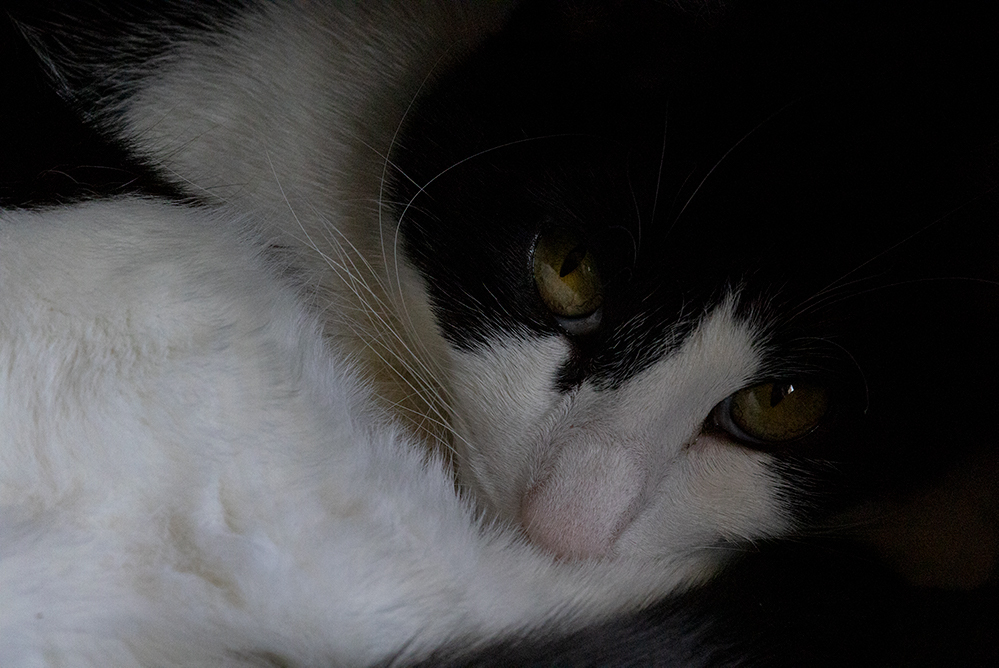
First click of the Canon RP f/7.1 1/20th Sec. ISO 12800

Recently after some careful consideration I pulled the trigger on getting a Canon RP and went with the 24-105 STM lens. I’ve had a few Canon cameras at this point, so jumped right in with little instruction.

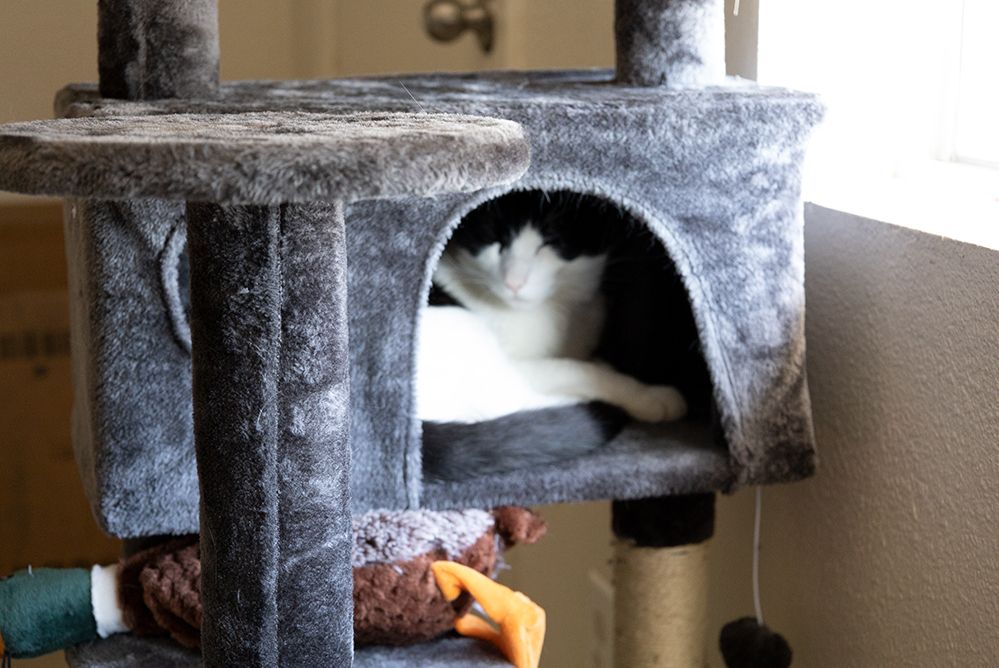
To the right is the first picture I took of my cat. It’s been a tradition with new cameras. She’s getting a little more comfortable in front of the lens. Even though the look on her face is “Great pictures…ugh”

I am very happy with the results so far. I was surprised to see this was taken at f/7.1 1/20th Sec. at an ISO 12800. I wasn’t even trying to hold the camera steady.

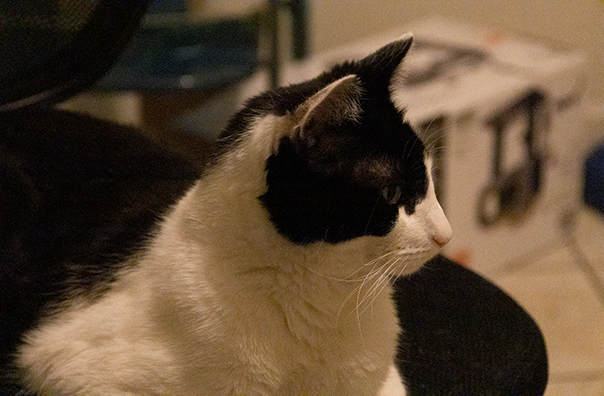
Manual settings 6th picture
f/8 1/601th Sec. ISO 40000

The second picture I attempted manual settings at f/8 1/60th Sec. ISO 40000. The image at full size is pretty noisy, but I think this still came out with good results.

I could use photoshop to soften the noise, but it also reduces the texture in her fur. This is the sixth picture and now she’s trying to ignore what’s going on.


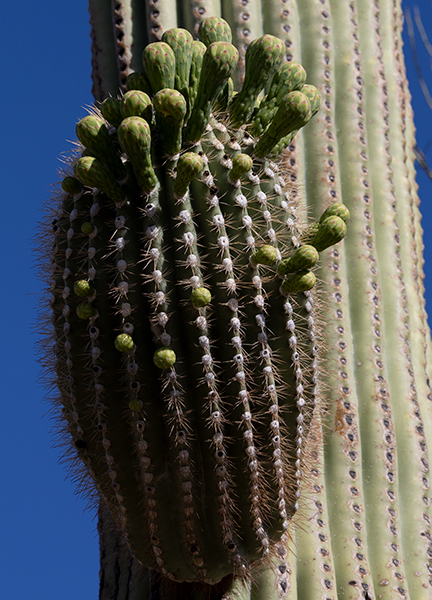
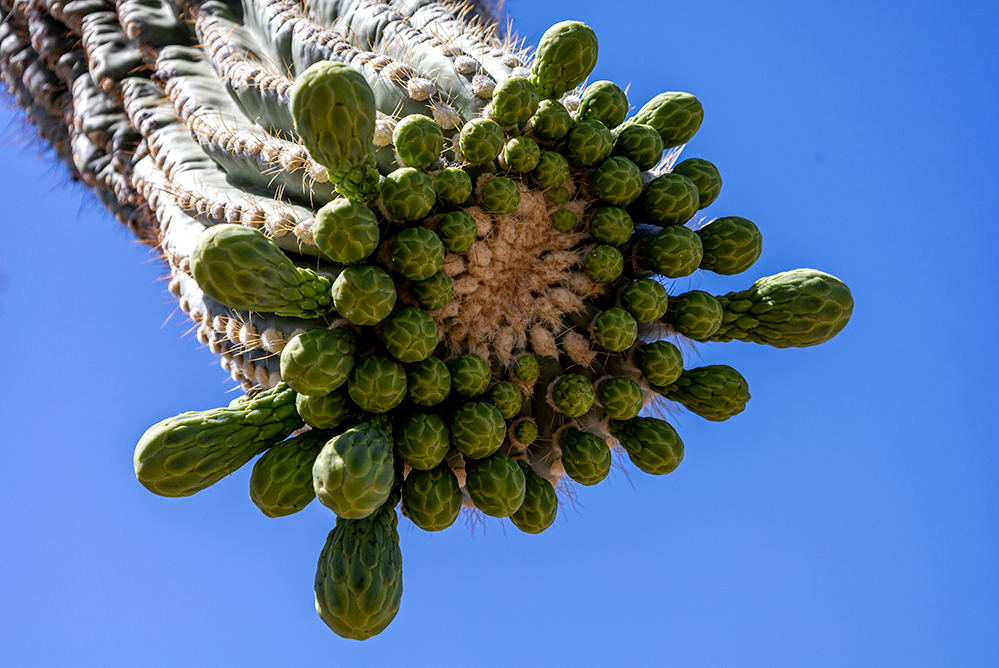
Zoomed shot of Saguaro flower buds using 24-105 STM

I was pretty tired by the time the battery charged, so I decided to get some rest and hit the road this morning. I figured just hiking with the setting on Auto would be fine. One of the things photographers struggle with in Arizona is the intensity of the sunlight. It’s tough to use the LCD or viewfinder to make sure the subject is in focus. I didn’t play with auto-focus other than have Eye-detection on. I think this may have added some difficulty. Also Auto Focus is locked to face detection in Auto shooting mode. Still it did produce sharp images, which I was relying on.

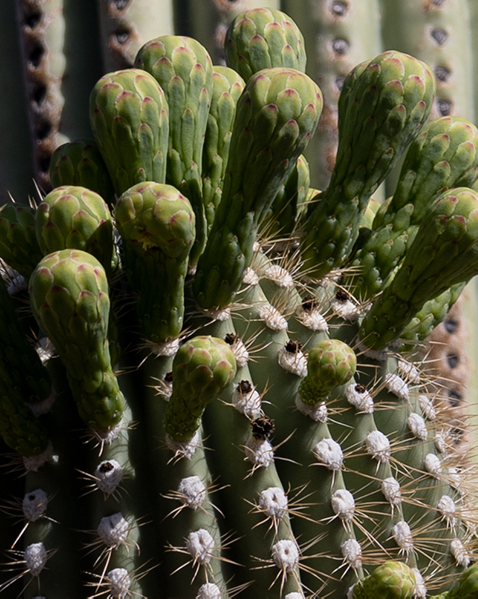
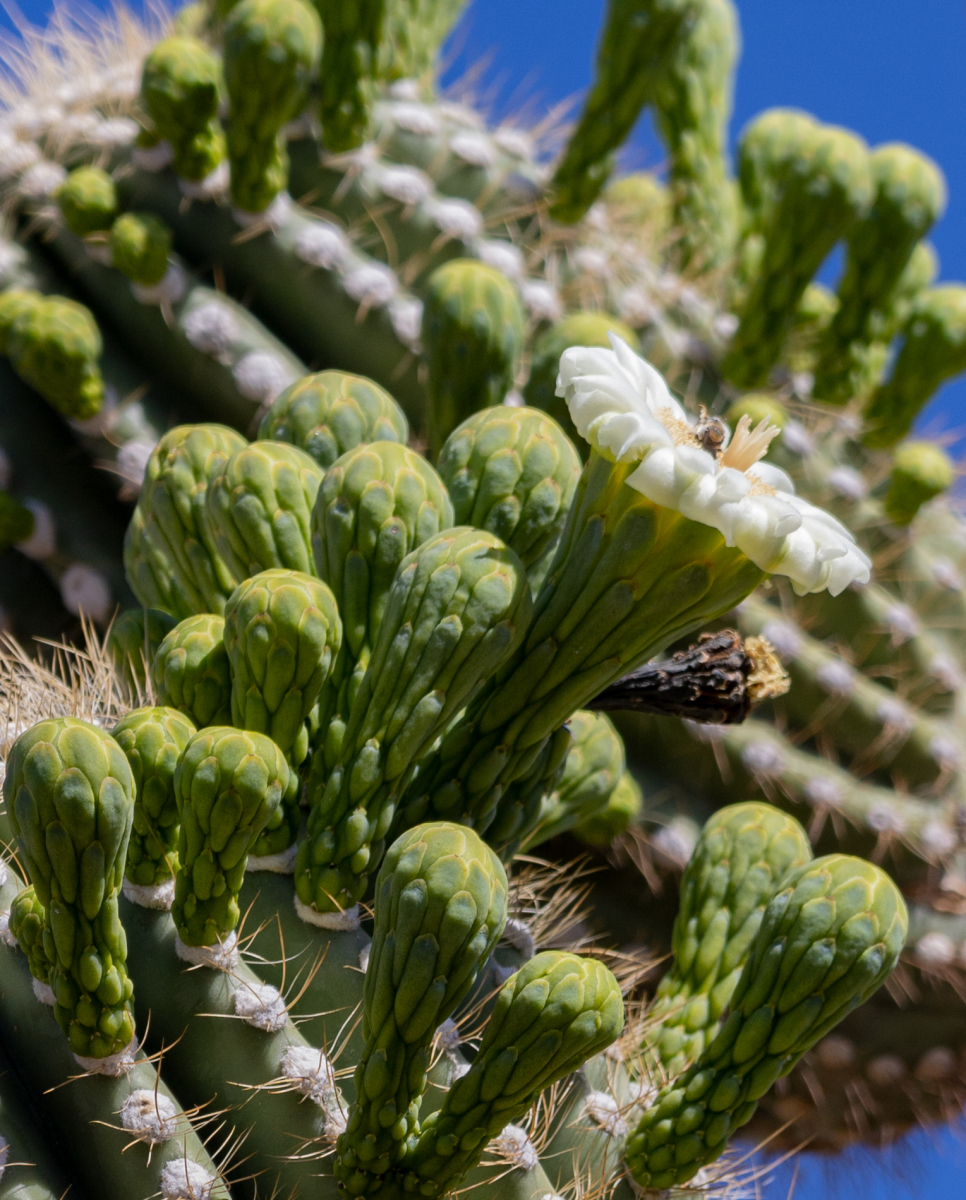
I added a cropped close up of the Saguaro fruit and needles. This was taken at 105mm at about 50ft from the Saguaro arm. (Without doing the math) Below is a closer shot on a low hanging arm with budding flowers. Kinda cool to see this perspective as most saguaros you would need a tall ladder to see what’s going on.

Saguaro flower buds taken with Canon RP

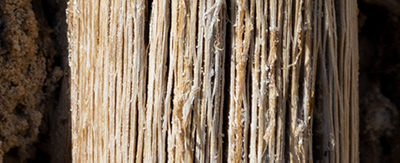
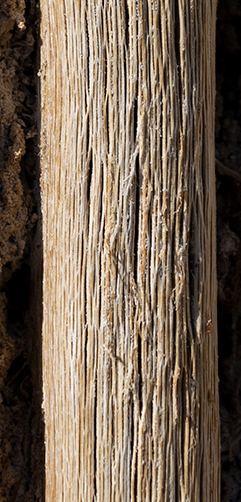
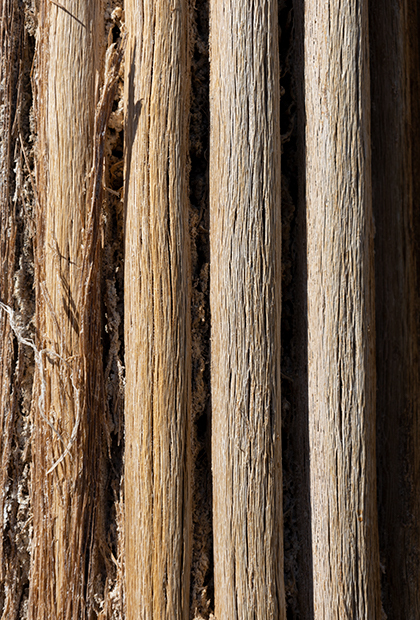
The conversion to jpeg reduces the quality of these dry Saguaro ribs, but this is like a macro shot at 95mm standing about 2-3 feet away. I really didn’t do this photo justice in auto mode with an aperture of f/7.1. Lesson learned!

Macro shot with Canon RP of Saguaro ribs
Saguaro Ribs

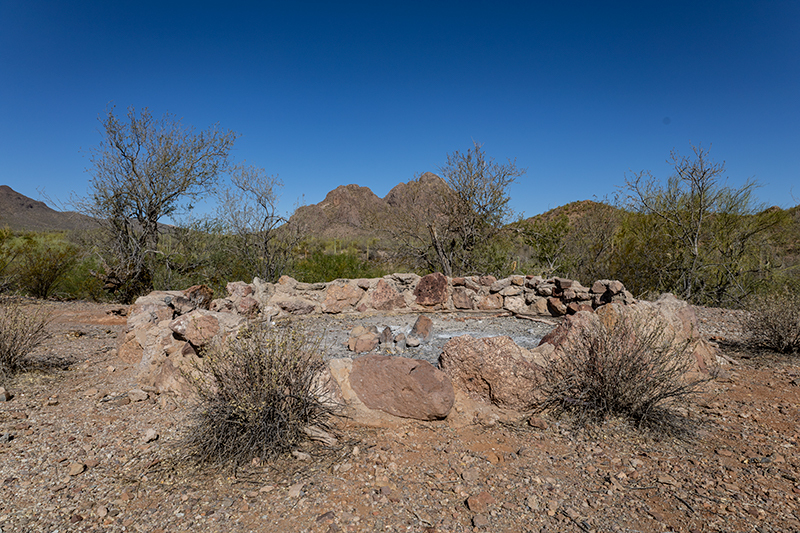
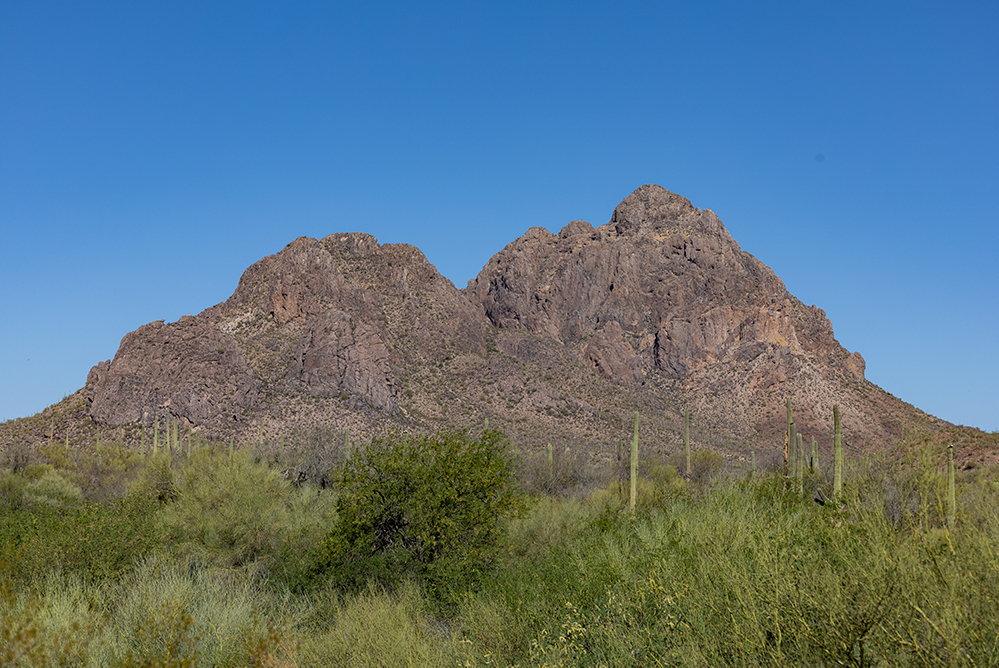
Below is a landscape image I struggled with using other cameras and lenses. In general whenever I would get home and zoom in the sky and ridgeline would have chromatic aberration, a purple line dividing the two. The green brush and trees below are crisp in comparison to past photos.

Landscape photo using Canon RP with 24-105 STM lens

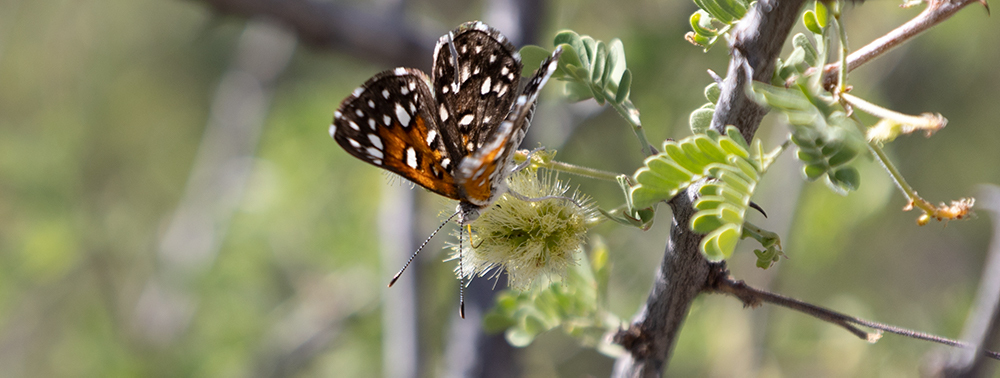
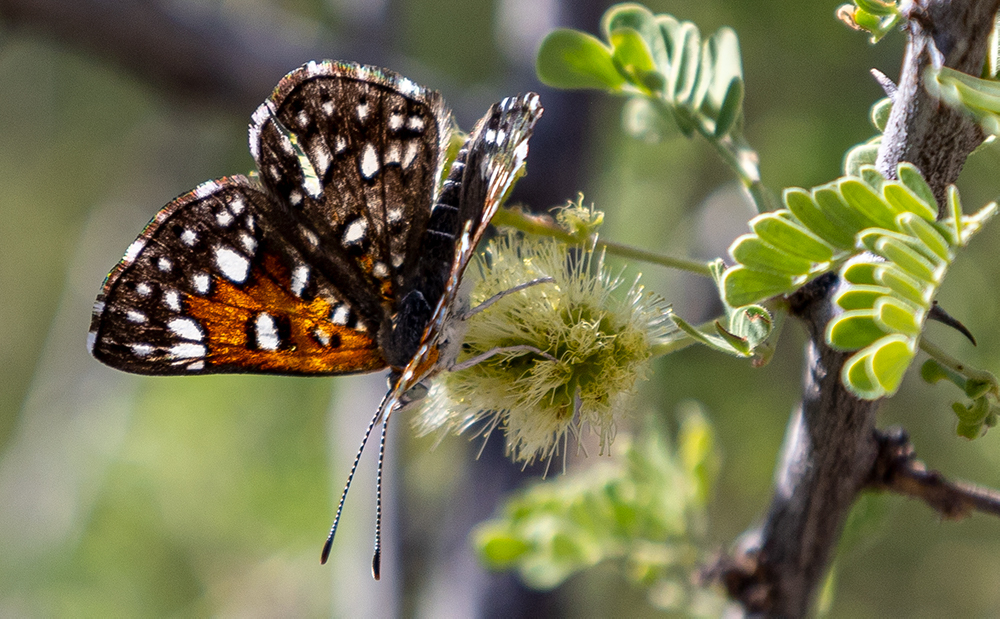
Below are a few shots where I was struggling with the focus. The depth of field bothers me a little, but still think these came out pretty good after all. I appreciate this little guy hanging around while I intruded on it’s lunch break.

Macro shots of butterfly using the Canon RP with 24-105 STM lens

I experimented with some depth of field after getting home and working on this post. I read some instructions earlier about focus bracketing and didn’t bother to look it up again. The RP has a feature that works with Canon software to bracket shots with different depths of field and combining them into one image. This is going to be a separate project for another day.

Depth of Field play with Canon RP
Depth of Field Play
Close-up photo of my cat with Canon RP
My favorite picture so far

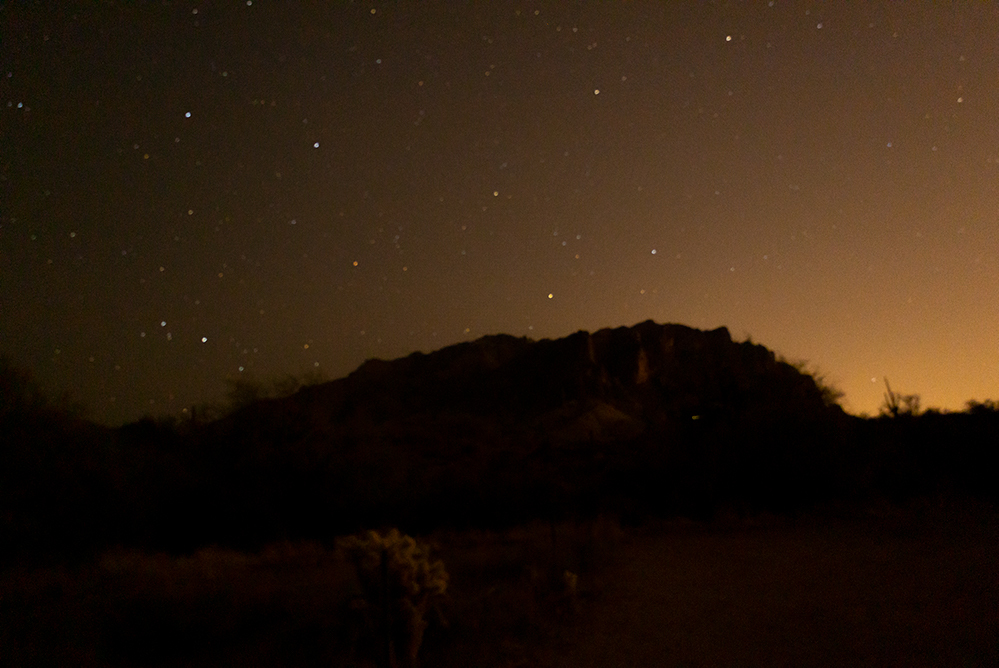
Next up was testing night photography out. Again who needs instructions?!!?1… It was fun I first started out like I did back on my old Canon T6 trying to find a bright start to focus on automatically. I didn’t realize I had left continuous focus on and that was a bit frustrating. Finally after thumbing through the menu I had the focus completely in manual. I discovered the greatest feature so far with the Canon RP, a focus meter! It still took a few shots to dial into infinity.

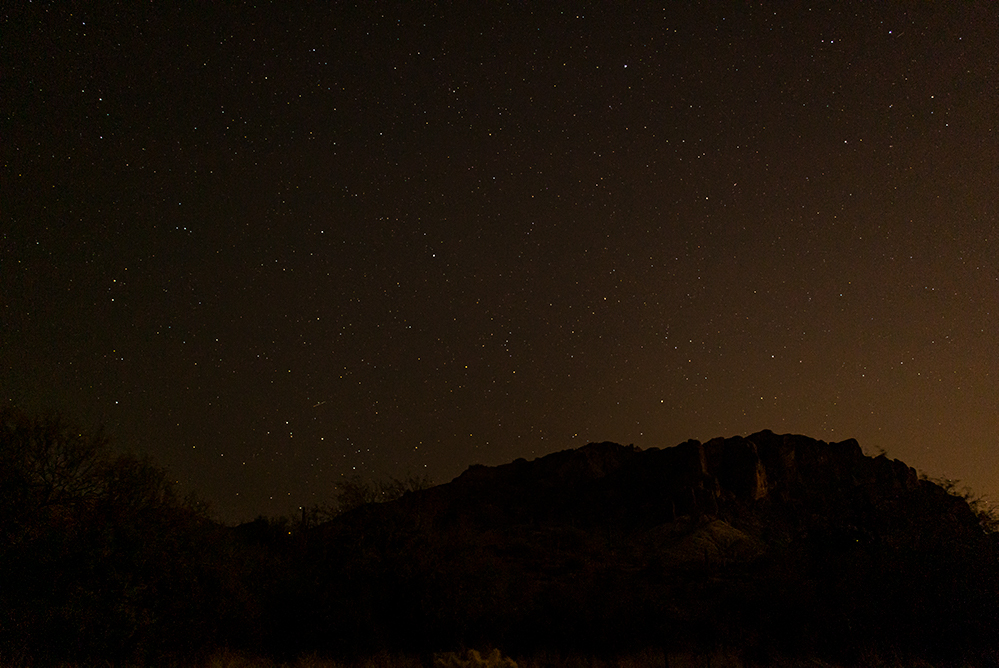
It’s still pretty early in the Northern Hemisphere Milky Way season, so I made sure I could get a few pictures with some stars in focus. My final settings were single shots at f/4 at 8 secs. with an ISO of 5000 at 24mm . No bracketing. Very very happy with the results and know there still some play with the settings.

Trying to focus at night with Canon RP
Flatiron at night
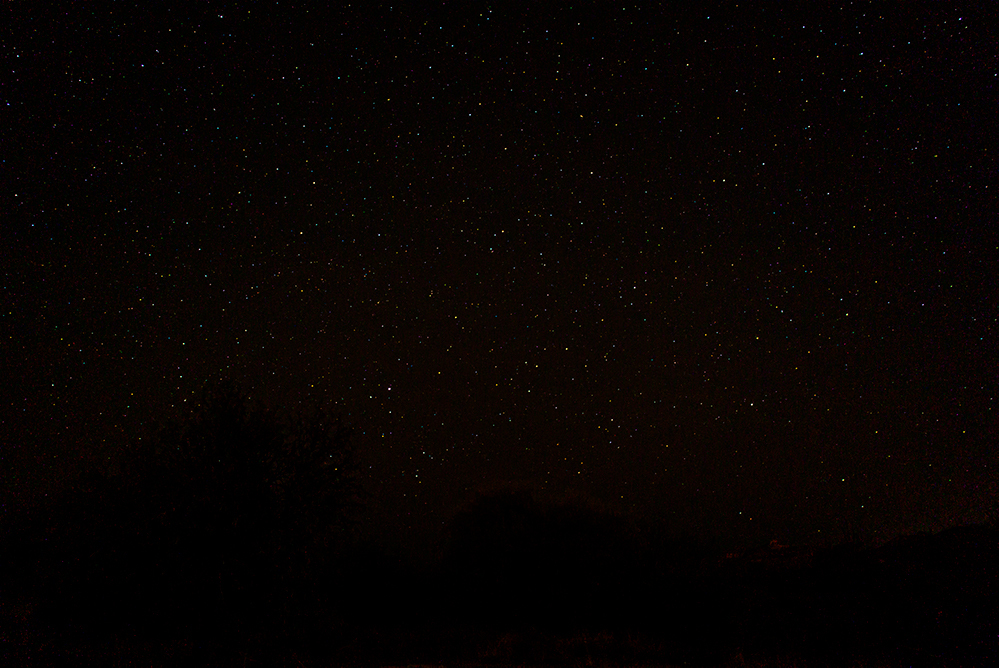
200% scale of stars taken with Canon RP
200% Scale
Photo of stars with Canon RP
Photo Raw adjustments to show off the universe a bit

Lost & Found

The other day I finally consolidated back-ups and found some files that I wanted to rework. Talk about satisfaction, and a little trip down memory lane. I’m still looking through the hundreds to see what can be turned from a blurry mess into something special.

A little love of the process in Photoshop brought this photo of the Phoenix Skyline together. The goal at the time was to create a frame from flowering creosote. The intense sunlight and natural contrast proved difficult. What I saw in this was a beautiful mirage in the distance with a flowering creosote bush right in the foreground.

The aptly named Fairy Duster. This wasn’t the best shot to begin with, but with Adobe Photoshop’s Shake Reduction it recovered fairy well. 😉

These lupine are beautiful and I was a lucky guy to find them. Or did they find me?

I had a couple ask me where to find all the wildflowers before taking these. The best way is to get out of your car and walk a trail. These photos make the flower appear larger than they actually are. So to see them you have to see a hint of purple, yellow, blues among the desert brush hiding them from the road.

My favorite Lost & Found is officially this image of the Milky Way Core. The color is like being inside a kaleidoscope in the middle of the high desert mountains.

Killer Bees & Desert Lavender

Went out for a quick hike and captured a great series of photos with Bees and Lavender the other day. I was feeling relaxed, calm, cool and calculated in a light swarm of bees feasting on brittlebrush, creosote, and of course lavender. Some of these might make a nice coffee table book if found in the annals of stock photography on Dreamstime.

I got a nice confidence boost from my local bee lovers in the AZ Photography group and feel these are sweet enough to attract more than a few people. Which makes me think of how specific animals have a niche market. Bees, Ladybugs, birds, fish, etc. It means I need to add a better telephoto lens that meets 2020 image standards.

Still figuring out the keywording for most stock websites as I help catalog plant species in the Sonoran Desert. It’s such a specific market most of what I am taking is just waiting for a few people rather than many. Time will tell if this was a personal epiphany. In the meantime feel free to use the cover photo for non-commercial use. If you have an idea for profit let me in on it.

Link to Purchase Killer Bees & Desert Lavender on Hartshornphoto.com

A Photographer’s Niche

I started this journey a couple years ago and find myself now saying I need to find my niche. I think it’s obvious what I am passionate about though. Needed to exercise and release some stress first and foremost.

This has been a great year for sunsets in Arizona. This one in particular is just on the edge of a storm blowing dust northward. Not the most epic one but enough to create a soft glow.

Southern View with Eastern Valley Cities
Western view - The  Phoenix skyline almost looks like another mountain.
Western view – The Phoenix skyline almost looks like another mountain.

The cover photo is available for sale here.

Largest format available @ 16 bit 11900 x 3940 Pixels

Dreamstime PlugIn

Recently installed the Dreamstime Stock Image WordPress Plug-in for sharing photos with a link to buy them if interested. The featured image of the Jumping Cholla Fruit and the Saguaro below were downloaded straight to the WordPress Media Library.

*Little technical note on my side it showed an error after downloading, but that is a small comment error in WordPress. Check the media library and filter the photos by the current month to find them. Happens with regular uploads also.

When It Rains, It Pours

Desert Scout

Today was a productive day after being down with the flu for a week. Glad to be back in action even at 3/4 speed. I was trying to find a way to Red Mountain and might have stumbled onto a desert scout that those big signs warn people about. Joking aside I was in a secret location in North Mesa, the picture below is more benign.

Desert Scout
An antelope squirrel at attention on top of rock pile in the desert.

The Storm of February 10th, 2020 in Fountain Hills

After getting some great stock photos of the Sonoran Desert. I had to go back home and figure out how to pay bills. Currently I drive rideshare and delivery, which is awesome for someone that needs thousands of pictures to make money selling stock photos.

The route went back East to Fountain Hills, where I got to see the storm develop with a mountain top view. I took my time, usually I am trying to set delivery records. Tonight I finished just in time to catch the squall that hit about 6:30 PM. I was leaving the last neighborhood and saw a dead end. The Airborne Ranger in the Sky was looking out tonight. Reviewing the weather radar, a squall formed over Gilbert hitting Fountain Hills right as I made my last delivery. I popped my trunk and just started shooting.

Cloud to Cloud

It took about 700 shots to get these three. I didn’t have time to focus man! A raging storm was throwing out lighting and I was laying down suppressive fire in response. Petting the Pig! Working that Canon 5D MKIV like it was one anyway.

Alright lesson learned. Again.

I need to look into new approaches for catching lightning. I think these were cloud to cloud. I honestly don’t remember hearing thunder. This time I just used the button, but the last time I would shoot ten frames at a time on tripod. Next time going with time lapse like I know I probably should. It’s tough to be in the right place at the right time to set-up though.

It did give me a bit of a chance to play with settings, but figuring out the best settings is challenging. I was parked at the bottom of  very dark fishbowl surrounded by mountains. Lightning caught at the right moment would act as a flash.

Here’s what worked for these shots on a Canon 5D Mark IV.

  • F/3.5
  • 1/60th of a Second
  • ISO 6400
  • Canon EF 28-135mm (@28mm) f/3.5-5.6 IS USM Zoom Lens
  • White Balanced for Flash

The flashes were violent and the incoming wind howling through the canyons deafened any other noise.
It was coming straight at me!
Good sense took over as the lightning grew brighter.

Patience

After sleeping on the files I discovered some more beautiful shots and reworked these a bit. I am creating a sequenced video file also, but probably will abondone my grand scheme for it. Note to self. Try video next time. I am not sure what I captured, but it certainly is a weather phenomenon. It looks like the lightning is remaining in the same general area. And some shots appear to be balls, but that’s probably due to the camera being out of focus.

Arcosanti Daytrip

Southern Face from gully on the visitor trail.

I like how my delivery work can turn into a day trip for photos. It’s not something I could do in an office job where they expect you to be at your desk looking busy all day.

Last Thursday I had a quick delivery to the outskirts of Phoenix and decided to see if I could get paid to go back with a trip. Otherwise that afternoon traffic in construction going East on the 101 was a no-go. I received a round trip with a group of young transplants from Chicago and they mentioned Sedona at some point.

Hmmm I was a third of the way there already. Hell why not? Right about the turn off point to Sedona my gut told me to pull off and check the map. I pull into a gas station to review Google maps as the afternoon sun was about to drop quick, it didn’t leave room for much exploration.

For some reason Arcosanti popped into my head and I Googled it. What? It’s where? No lie, I look up and was staring at the road sign pointing to Arcosanti. My observation skills were on point.

It’s a long bumpy road past some other local business or ranches. At the end is a small dirt parking lot and a paved path to the entrance. Met this orange tabby along the way.

Arcology = Architecture and Ecology

Paolo Soleri is the visionary behind Arcosanti. If you are not familiar with either check out the website it’s an entire college course once you enter the rabbit hole.

Arcosanti showcases the principals of Arcology or Architecture and Ecology. If you look back at the cover image there is a stair encasement to the right that leads to the visitor areas. 

Taliesin West is where Paolo studied for a while after earning his doctorate in Italy. The use of land and architecture goes back to ancient history most of my observations are Arcosanti uses Roman and Egyptian technology for heating, cooling, and lighting.

The basic thought is we are wasting space, wasting time, wasting resources, causing pollution, and most importantly removing ourselves from nature one street at a time. An Arcologically developed city would condense populations to make use of resources more efficiently. Think of science/fiction space exploration movies with an entire city housed in one ship. 

Once I made it to the third floor visitor center I took a look around and held off on more photos. Eventually I was greeted by someone and paid for the $15 tour. Depending on the time you can buy lunch and even stay the night. I was told photos were ok (free advertising) and to have a seat where this Wind Bell was on display next to the tour video playing.

As the video ended we got the spiel from our tour guide. Our tour group consisted of me and another dude, so easy day for her.

Our first stop was the ceramic workshop/amphitheater. This time of year is gorgeous for working outdoors in the shade with a light breeze. Come summer I would be interested in seeing the temps and probably will for a chance to get better night shots.

I’ll be honest my listening became selective at this point as I was there to take pictures and my camera needed attention. Our tour guide probably was glad we didn’t have a ton of questions too.

Checkout the gallery below for some of the shots on the guided tour.

Visitors Trail

There’s also a non-guided tour persay, but it won’t get you inside very far. Although a great place for a panoramic shot of Arcosanti. At the bottom of the stair encasement is the door to the Visitors Trail. The end of the trail is marked with a kite shaped awning on a single pole, which is on the other side of the valley. It’s maybe a mile long in total, down the valley, up the other side and back. A little slippery in spots, but not incredibly challenging. I did it in my driving shoes.

Future Plans

I’m going to look into the overnight stay a little more. I left wanting to spend more time making the right adjustments, catching the right light, the right angle, setting up HDR shots.

Along the way home I decided to stop and visit Bloody Basin – Agua Fria National Monument for my sunset shot. Ended up being more interested in making this composite of the Orion constellation. The brightest star, Betelgeuse, is spinning off plasma as it moves through the universe. Turns out what I was observing was dust.

Well anyways thanks for reading, go check Arcosanti out for yourself. Certainly worth a quick stop on your way north.